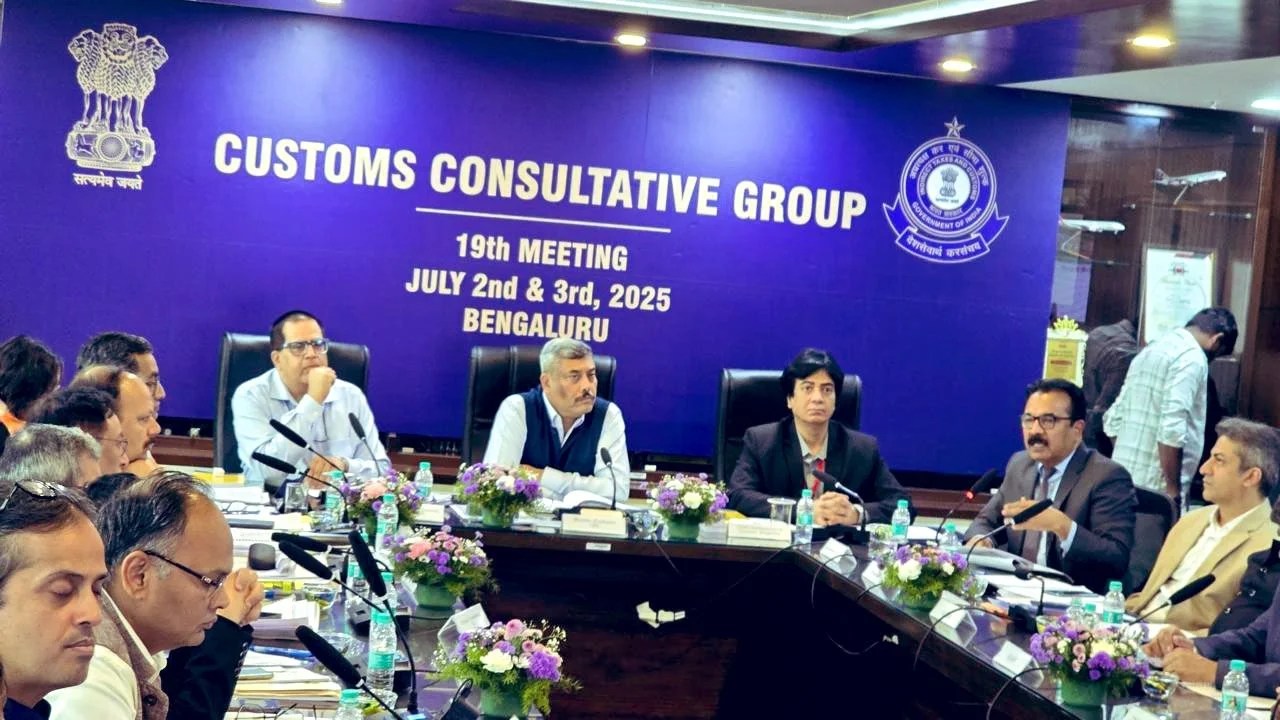
Surjit Bhujabal (Member, Customs, CBIC) Chairs 19th Customs Consultative Group Meeting in Bengaluru – Major Steps to Enhance Ease of Doing Business & Trade Facilitation
🌐 By Aaerm Law Associates — July 5, 2025
📌 Overview
On July 2–3, 2025, in Bengaluru, the Central Board of Indirect Taxes and Customs (CBIC) convened its 19th Customs Consultative Group (CCG) under the stewardship of Shri Surjit Bhujabal, Member (Customs), CBIC. This apex-level summit brought together an expansive range of industry stakeholders—including major trade bodies, exporters, logistics partners, and allied government agencies—further strengthening India’s drive for enhanced trade facilitation, regulatory responsiveness, and robust stakeholder governance in international trade.
🏛️ What is the Customs Consultative Group (CCG)?
- Founded in 2011, the CCG functions as CBIC’s prime consultative platform for customs clearance and cross-border trade issues.
- It includes high-level representation from major industry chambers like CII, FICCI, ASSOCHAM, FIEO, MAIT, NASSCOM, PHDCCI, STPI, along with logistics sector stakeholders—customs brokers, freight forwarders, bulk cargo handlers, port operators, and banks.
- This year, the CCG strategically expanded to include 35 Export Promotion Councils and two air freight associations, signaling a wider and more inclusive consultative footprint.
👥 Who Participated?
The assembly comprised senior functionaries from CBIC, field formations, and key agencies including:
- Reserve Bank of India (RBI)
- Director-General of Foreign Trade (DGFT)
- Bureau of Indian Standards (BIS)
- DPIIT
- Department of Posts
- Ministry of Shipping
- Airport Authority of India
- Central Pollution Control Board
- Animal Quarantine Department
- CDSCO
- FSSAI
This broad participation reflected the government’s multi‑agency, integrated approach to addressing trade‑related challenges head-on.
✅ Scope & Scale of Deliberations
- 181 agenda points were presented by stakeholders for discussion.
- In comparison, the previous CCG (November 2024) addressed 116 out of 136 items via policy circulars, operational directives, and the enhancement of ICEGATE—the electronic customs gateway—demonstrating a high implementation rate.
- Shri Bhujabal emphasized the CCG’s critical role in supporting the National Trade Facilitation Action Plan (NTFAP) to foster multi-ministerial synergy in trade infrastructure, frameworks, and regulatory processes.
🔑 Key Decisions & Initiatives
- New Policy for Bulk Liquid Cargo Discharge
Introduced to optimize port storage use, this policy aims to tackle capacity constraints at port terminals—especially important for managing high-volume liquid shipments effectively. - SOP for Duty‑Drawback Claims on Jewellery
A standardized procedure for duty drawback on jewellery sold at international exhibitions will enhance clarity and speed up the process for exporters. - Authorized Economic Operator (AEO) Framework Review
AEO-certified traders will see streamlined procedures, enhanced privileges, and improved trust-based customs facilitation. - Department of Posts Collaboration
Strengthened support was pledged for small exporters, through post‑based export centers like the “Dak Ghar Niryat Kendra”—connecting rural MSMEs to international trade. - Transition to e‑Bank Guarantee Module
Moving from paper to full digital guarantee submission will reduce processing time, documentation burdens, and increase transparency. - Field-Level Diagnostic Studies
CBIC agreed to conduct site-specific trade-impact analyses to better understand local challenges and tailor facilitation measures accordingly.
💬 Stakeholder Presentations
- Gems & Jewellery Export Promotion Council: Shared the latest on lab-grown diamonds, focusing on export strategies, quality standards, and duty-drawback norms.
- BIS: Presented insights on the Quality Control Orders (QCO) framework and compliance guidance.
- Department of Posts: Highlighted the impact of initiatives like the “Dak Ghar Niryat Kendra” to support MSME exporters.
- JNPT (Jawaharlal Nehru Port Trust): Provided progress updates on the proposed mega-port project at Vadhvan, Maharashtra, underlining India’s expanding port infrastructure.
🌟 Significance & Impact
1. Trade Facilitation Gains
- Faster customs clearance and port handling improves India’s global logistics competitiveness.
- The e‑Bank Guarantee module simplifies compliance, reducing friction for exporters and importers.
2. Leading-Edge Regulatory Environment
- SOPs and policy reviews reduce confusion, enhance transparency, and foster a business-friendly ecosystem.
- Aligning with global trade facilitation norms strengthens India’s position in global trade indices.
3. Support for MSMEs & Inclusivity
- Collaboration with Posts and Export Promotion Councils amplifies last-mile connectivity for small exporters.
- Reports and SOPs focused on rural MSME participation signal deeper inclusivity.
4. Digital Empowerment
- AEO reforms and ICEGATE enhancement fuel India’s customs digitization roadmap—reducing physical interventions and increasing automation.
- Field-level surveys pave the way for data-driven policy formulation.
📈 Looking Ahead
- Outcome Tracking: Monitoring the conversion of these 181 agenda points into actionable outcomes—through circulars, ICEGATE updates, or operational reforms—is crucial.
- Partnership Expansion: As emerging sectors (e.g., air freight, lab-grown gems) increase in representation, broader stakeholder consultations are expected.
- Infrastructure Boosts: The Vadhvan mega-port, bulk-cargo policies, and e-guarantee reforms complement India’s Make in India, MSME growth, and $5-trillion economy goals.
- NTFAP Integration: Continued alignment with the Ministry of Commerce’s trade facilitation blueprint will deliver holistic infrastructure and regulatory gains.
📝 Conclusion by Aaerm Law Associates
The 19th CCG meeting marks a pivotal moment in India’s trade journey. With a focused agenda and substantive outcomes—including digital guarantees, SOPs, MSME support, AEO framework upgrades, and targeted trade studies—the CBIC has showcased its commitment to responsive governance, stakeholder-centric policies, and ease of doing business.
By clearly aligning the consultative process with the NTFAP and global trade facilitation standards, the CBIC is enhancing India’s international trade ecosystem—building trust, transparency, and trade competitiveness by jointly working with private stakeholders, civil institutions, and allied agencies.
